


Dog Harness Fit: Understanding Friction, Moisture, and Skin Contact
A dog harness does more than connect your leash to your dog. It also sits against the coat and body while your dog walks, explores, turns, sniffs, and moves.
That makes fit, placement, construction, and material worth considering when choosing everyday walking equipment.
But how do you know whether a harness is a good fit for your dog?
And what should you pay attention to when a harness comes into regular contact with your dog's coat and skin?
Let's take a closer look.
What Happens When a Harness Meets Your Dog's Coat and Skin?
Every harness creates some degree of contact between its materials and the dog's body.
As your dog moves, the harness can shift slightly with the body. The amount of contact can vary depending on the dog's size, shape, coat, movement, harness construction, and how the harness has been adjusted.
This is one reason that fit matters more than simply choosing a harness based on appearance.
A harness that fits appropriately should be positioned according to the manufacturer's instructions and adjusted for the individual dog.
Friction and Harness Contact
Friction is simply resistance that occurs when two surfaces move against one another.
With a dog harness, this can involve the harness material, the dog's coat, and the body underneath.
The amount of friction and contact can vary considerably between dogs. Coat length and texture, body shape, harness construction, movement, and fit can all influence how equipment sits during a walk.
That doesn't mean every harness will create the same experience for every dog.
It means that observing how a harness fits and moves with your individual dog is an important part of choosing walking equipment.
What should you look for?
When your dog is wearing a harness, pay attention to:
-
whether the harness stays positioned as intended during normal walking
-
whether the straps are adjusted according to the manufacturer's instructions
-
whether the harness is excessively loose or tight
-
whether the harness shifts substantially during movement
-
whether your dog appears comfortable wearing the equipment
-
whether the harness remains appropriate as your dog grows or changes shape
Moisture and Harness Materials
Moisture is another practical consideration for dog parents.
Rain, swimming, humid weather, wet grass, and a damp coat can all introduce moisture into a dog's everyday routine.
The material and construction of a harness can influence how it should be cleaned and dried.
That's why it's important to follow the manufacturer's care instructions and allow equipment to dry appropriately after it becomes wet.
For dogs who regularly spend time outdoors, simple maintenance can also help keep walking equipment fresh and ready for the next adventure.
Why Harness Coverage and Construction Matter

Not every harness is constructed the same way.
Some designs use broader areas of material across the body. Others use narrower straps or a more minimal construction.
There isn't one harness design that is automatically right for every dog.
Instead, consider your dog's:
-
size
-
body shape
-
coat
-
daily activities
-
walking routine
-
ability to tolerate different styles of equipment
-
need for adjustability
-
ease of putting on and removing the harness
The goal is to choose equipment that makes sense for your individual dog and your everyday routine.
What Should You Look For in a Dog Harness?
Before purchasing a harness, consider these five areas.
1. Fit
Start with the manufacturer's sizing instructions rather than choosing a size based only on breed or weight.
Dogs of the same breed can have different proportions, and mixed-breed dogs can vary even more.
2. Adjustability
Adjustable components can make it easier to customize the fit for an individual dog.
Always follow the manufacturer's instructions for making adjustments.
3. Construction
Look at how the harness is made, including the straps, attachment points, closures, and overall construction.
These details can make a difference in how practical the harness is for your daily routine.
4. Ease of Use
A harness that is straightforward to put on and remove can make getting ready for a walk simpler.
This can be especially useful for dogs who become excited when they see their walking equipment.
5. Your Dog's Individual Response
Your dog is the one wearing the harness.
Watch how the equipment sits during normal activities and reassess the fit if your dog's size, coat, or routine changes.
What About a Step-In Harness?

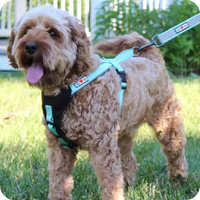
For dog parents who prefer a straightforward approach to putting on walking equipment, a step-in harness can be an option worth considering.
With a step-in design, the dog's front paws are placed into the designated openings before the harness is secured according to the manufacturer's instructions.
Pawtitas offers step-in harness options in a range of colors and sizes for dog parents looking for a simple addition to their walking routine.
Explore Pawtitas Step-In Harnesses →
How to Check Your Dog's Harness Fit
Once you've selected a harness, don't forget to check the fit periodically.
A simple routine can help:
1. Check the size.
Make sure you're using the manufacturer's recommended size for your dog's current measurements.
2. Check the adjustment.
Follow the product instructions and make sure the harness is adjusted as intended.
3. Watch the harness while your dog walks.
Observe whether it stays positioned as expected during ordinary movement.
4. Check after activity.
After a walk, look at the harness placement and your dog's coat where the equipment was sitting.
5. Reassess as your dog changes.
Puppies grow. Adult dogs can gain or lose weight. Coats change with grooming and seasons. A harness that fit well previously may need to be reassessed.
Read the Pawtitas Harness Size & Fit Guide →
When Should You Reconsider Your Dog's Harness?
If your dog repeatedly tries to remove the harness, the equipment shifts substantially during ordinary walking, or you notice persistent rubbing or another concern, stop and reassess the fit and equipment.
Check the manufacturer's sizing and adjustment instructions first.
If your dog has persistent skin irritation, pain, or another health concern, speak with your veterinarian rather than assuming the equipment is the cause.
Choosing Walking Equipment With Intention

Choosing a dog harness doesn't have to be complicated.
Start with the individual dog in front of you.
Consider fit. Consider construction. Consider your dog's routine. Consider how easy the equipment is to put on, adjust, clean, and use.
And most importantly, pay attention to your dog's individual needs rather than assuming that one design will work identically for every dog.
At Pawtitas, we believe everyday pet products should combine thoughtful design with the practical realities of life with dogs.
That's why we pay attention to details such as materials, construction, color, sizing, adjustability, and how products fit into real dog-parent routines.
Explore Pawtitas Dog Harnesses →
A Note for Dog Parents
This article is provided for general educational purposes and is not veterinary advice. Harness fit and equipment needs can vary between individual dogs. If your dog has persistent skin irritation, pain, or another health concern, consult your veterinarian.


Leave a comment